
There is a distinct magic in the moment you find the perfect wallpaper. Whether it’s a softly hand-drawn woodland scene for a nursery or a sophisticated floral for a period dining room, that pattern represents the beginning of a home’s transformation. However, once the initial excitement of choosing a design settles, a more practical question inevitably follows: “How much of this do I actually need?”
Calculating wallpaper quantities is often the part of the decorating process that feels the most daunting. Buy too little, and you risk a mid-project stall or, worse, being unable to source the same batch number (and therefore risk an exact colour match). Buy too much, and you have expensive rolls gathering dust in the loft. Although I’d like to point out that there are lots of things you can do with leftover over wallpaper, from lining drawers to adorning the outside of cupboards to match the wall – check out my guide on Creative Ways To Use Wallpaper here.
The good news? It isn’t nearly as complicated as it seems. With a tape measure, a bit of patience, and this straightforward guide, you can confidently determine exactly how many rolls you need for a seamless, professional finish.
1. Step One: Measure Your Walls
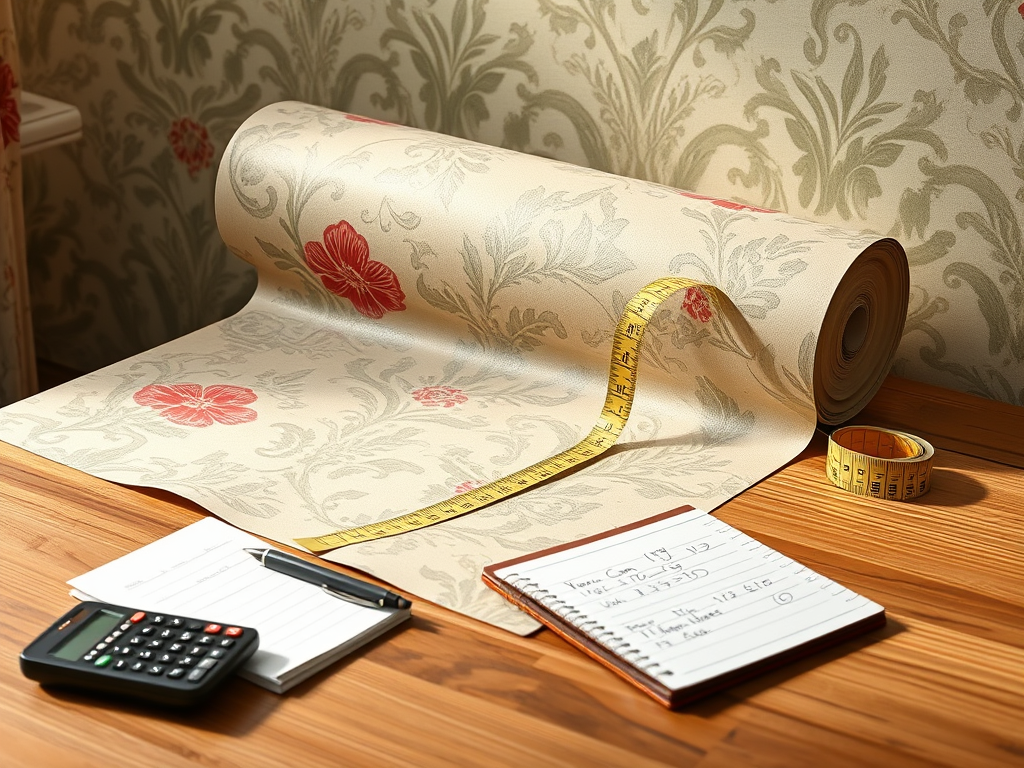
Before we dive into the mathematics, we need accurate data. Grab a metal tape measure (fabric ones can stretch and lead to errors) and a notebook.
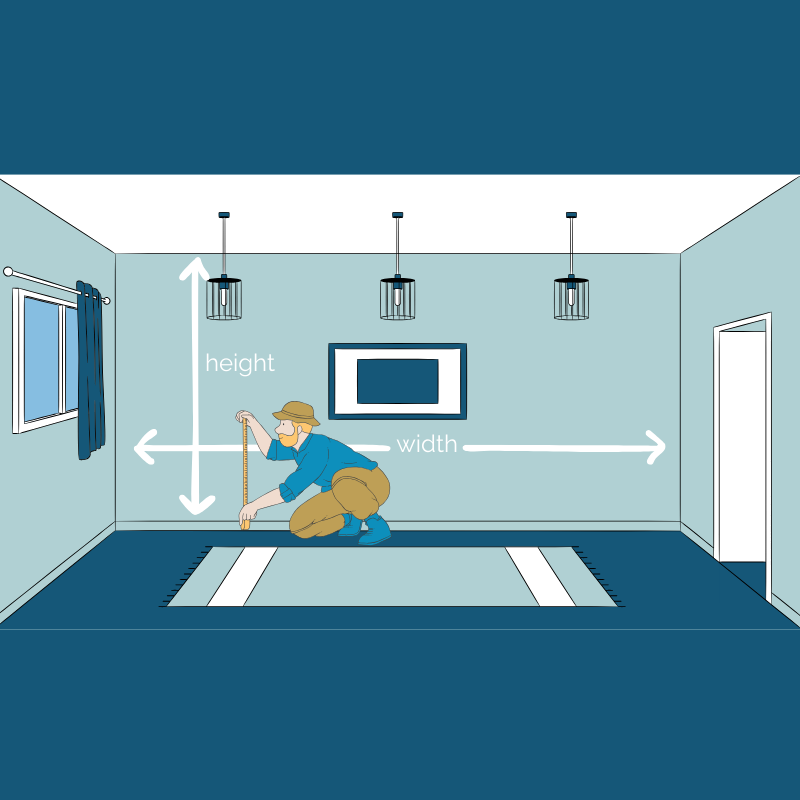
To get started, you need to measure every wall you intend to paper.
- The Width: Measure the horizontal distance from one corner of the wall to the other.
- The Height: Measure from the top of the skirting board to the bottom of the coving (or the ceiling line).
Expert Tip: Walls are rarely perfectly square, especially in older British homes. Always measure the height in two or three different places along the wall and use the largest measurement to ensure you don’t end up short.
2. Step Two: Calculate the Total Wall Area
Once you have your measurements in metres, you can find the total area. This is the “canvas” you are looking to cover. However, to make it easy you can use the Willow and Woods Wallpaper Calculator
To find the area of a single wall, simply use the formula:
Width x Height = Area (in square metres)
For example, if a wall is 4m wide and 2.5m high, the area is 10m squared. Repeat this for all the walls you plan to wallpaper and sum them up to get your Total Wall Area.
3. Step Three: The Secret Ingredient – Pattern Repeat
This is where many people get caught out. If you were painting, you’d just worry about the surface area. But one of the most important factors when calculating how much wallpaper you need is the pattern match, as this directly affects how much usable wallpaper comes from each roll.
Wallpapers with a repeat require you to align the design across each drop, which often means trimming off sections to ensure the pattern flows seamlessly from one strip to the next. The amount of waste this creates depends on the type of repeat (such as straight match, half drop, or random match) and the size of the pattern repeat itself. Larger repeats and half-drop patterns typically require more wallpaper, as more material is lost during matching.
This is why two wallpapers with the same roll size can yield very different coverage – understanding the repeat and drop is essential for accurate calculations and avoiding under-ordering.
- Free Match: The pattern doesn’t need to align (like a simple texture). There is very little waste here.
- Straight Match: The pattern matches horizontally across the width. You’ll lose a small amount at the top of each drop to align the design
- Offset, Half Drop or Drop Match: This is common in complex, visionary designs. The pattern “drops” halfway down the next strip to create a more organic feel. This requires more wallpaper because you’ll have more offcuts.
How to adjust:
Rather than adding a percentage, it’s more accurate to think in terms of how many full drops you can get from each roll. Pattern repeats reduce the number of usable drops, particularly with larger repeats and half drop designs.
As a general guide:
- Always calculate your drop length and round it up to the next full pattern repeat
- Expect to get fewer drops per roll when the repeat is large
- For half drop patterns, it’s safest to allow one fewer drop per roll, or consider ordering an extra roll
This approach will give you a more reliable estimate than working from surface area alone, and helps avoid running short once installation begins.

4. Step Four: Accounting for Windows and Doors
No room is a perfect box. You likely have windows, doors, or perhaps a fireplace to work around.
While it’s tempting to simply calculate the wall area and ignore the “holes,” it is better to subtract particulalry large obstructions to be more precise. If you intend to do this, measure the height and width of your doors and windows, calculate their area, and subtract that from your Total Wall Area.
A Note of Caution: You don’t have to subtract the ‘holes’. If a window is particularly small, or you want some extra wriggle room, many designers choose not to subtract. This provides a safety net of extra paper which can be invaluable if a mistake is made during the cutting process.
5. Step Five: Determine the Number of Rolls
Now for the final calculation. A standard UK wallpaper roll is typically 52cm wide and 10 metres long, covering approximately 5.2 square metres. However, always check the specific roll dimensions of your chosen design, as artisanal or wide-width wallpapers may vary.
To find the number of rolls, either visit our online wallpaper calculator or:
Always round up to the nearest whole number.
The “Safety Roll” Rule
We always advise ordering one extra roll beyond your exact calculation. This isn’t just for mistakes (though we all have them!). Having an extra roll from the same batch number is vital. Wallpaper is printed in “batches,” and if you have to order another roll six months later, the colours might be slightly different due to the nature of the printing process. Having a spare roll tucked away also means you can easily repair a section of the wall in the future if it gets damaged.
Conclusion
With these steps, you’ve transformed a daunting task into a manageable plan. Measuring and calculating correctly is the foundation of a stress-free renovation. It ensures that when the time comes to hang your wallpaper, you can focus on the joy of seeing your vision come to life rather than worrying about the numbers.
Start measuring your space today, and take that first step toward a home that feels uniquely yours.
Need help selecting the perfect design?
Explore our collection of hand-drawn wallpapers to find the timeless pattern that speaks to your style, browse my hand-drawn collection here. I’m always happy to help you choose the perfect sample to start your design journey.
If you are feeling overwhelmed by your pattern choices, and pulling together a scheme that brings you joy, check out my Pattern Consultations – get my help and suggestions (and no, they won’t include my own designs unless they particularly match what you are looking for!)